
Tesamorelin vs. HGH
Tesamorelin vs. HGH
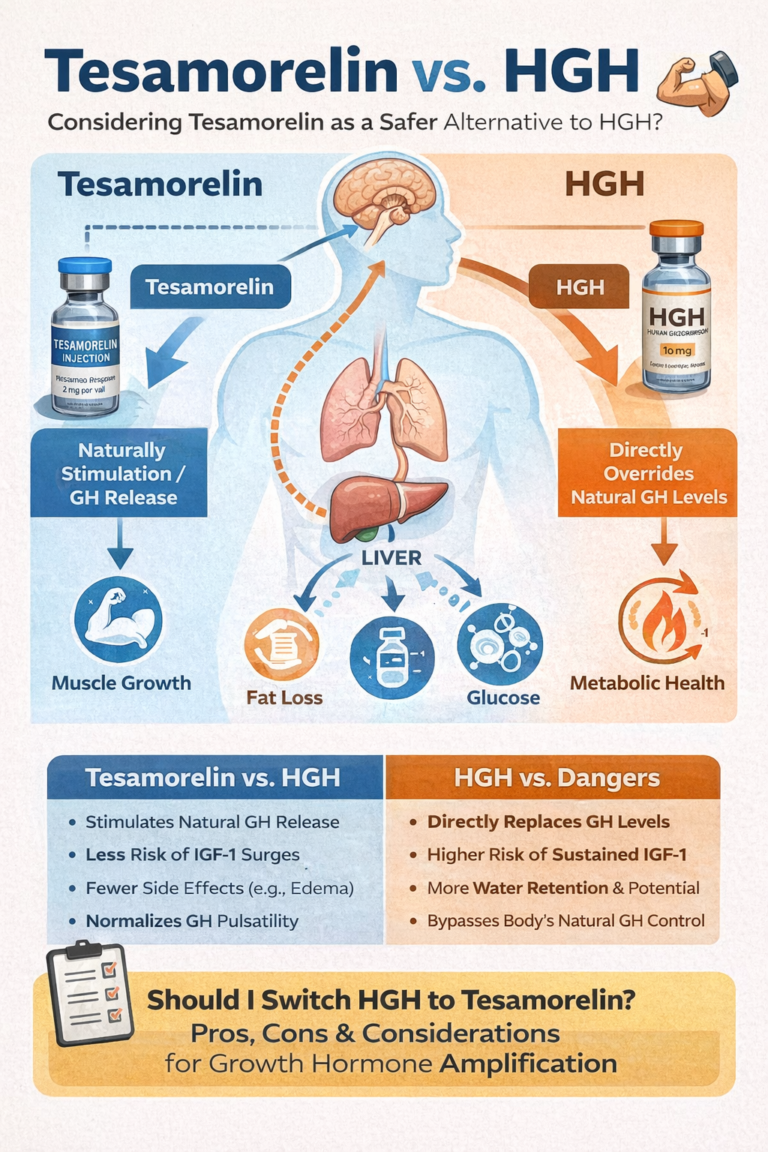
A Practical Overview of “Replacement” or Transitioning
Tesamorelin and HGH both influence the growth-hormone / IGF-1 axis, but they work in fundamentally different ways. The decision to switch from HGH to Tesamorelin is typically driven by goals, safety considerations, side-effect risk, and regulatory factors.
⚙️ How Each Works
HGH (Somatropin)
- Synthetic human growth hormone
- Directly increases GH and IGF-1 levels in the body
- Bypasses hypothalamic–pituitary regulation
Tesamorelin
- A synthetic GHRH (Growth Hormone–Releasing Hormone) analog
- Stimulates the pituitary to release your own GH in physiologic pulses
- Preserves normal negative-feedback control mechanisms
In short:
HGH = external hormone replacement
Tesamorelin = stimulates natural production
🎯 When People Consider Switching
Common reasons patients or clinicians explore Tesamorelin instead of HGH include:
- Desire for a more physiologic GH pattern
- Concern about chronically elevated IGF-1
- Water retention / edema on HGH
- Increased appetite or glucose intolerance on HGH
- Preference for a therapy with lower long-term systemic exposure
✅ Potential Advantages of Tesamorelin
- Stimulates GH in natural pulsatile fashion
- Typically produces less edema and water retention
- Lower risk of sustained supraphysiologic IGF-1
- May be better tolerated metabolically in some patients
- Strong evidence base for visceral fat reduction
Tesamorelin has FDA approval for HIV-associated visceral adiposity, but in practice it is sometimes used off-label in metabolic optimization contexts under clinician supervision.
⚠️ Considerations & Limitations vs HGH
- Not a “1:1 replacement” — effects are generally milder
- Fat loss benefits > mass-gain benefits
- Requires intact pituitary function
- Insurance coverage is often limited to approved indications
- Can still raise IGF-1 — requires monitoring
Potential side effects (both drugs share some overlap):
- Injection site irritation
- Headaches
- Insulin sensitivity shifts
- Mild joint or muscle discomfort
Monitoring typically includes:
- IGF-1
- Fasting glucose / A1C
- Lipids
- Symptoms & clinical response
🧠 Conceptual Positioning
Think of Tesamorelin as:
“Regulating and stimulating the body’s own GH rhythm”
Whereas HGH is:
“Replacing and overriding GH directly”
For patients seeking fat-loss / metabolic outcomes with fewer systemic effects, Tesamorelin can sometimes be a strategic alternative.
For patients seeking strength, performance, or aggressive anabolic effect, HGH generally exerts stronger influence — but also carries more risk and monitoring burden.
📌 Bottom Line Summary
Switching from HGH to Tesamorelin may make sense when the goals are:
- visceral fat reduction
- metabolic health improvements
- physiologic GH stimulation
- fewer fluid-retention / edema effects
It is not a direct substitute for HGH in terms of magnitude of effect, but can be a safer and more targeted approach in the right patient context.